Unpacking the Data Layers Behind Cricket Test Match Forecasts on Peer-to-Peer Betting Platforms
Written by Zara Ludwig · Aug 30, 2026

Unpacking the Data Layers Behind Cricket Test Match Forecasts on Peer-to-Peer Betting Platforms
Cricket Test match forecasts on peer-to-peer betting platforms rely on multiple layers of data that combine historical records with real-time inputs to support user-generated odds and wagers. These platforms allow participants to set and accept bets directly against each other rather than through traditional bookmakers, which increases the need for transparent data sources that inform decision making.
Core Data Components in Test Match Analysis
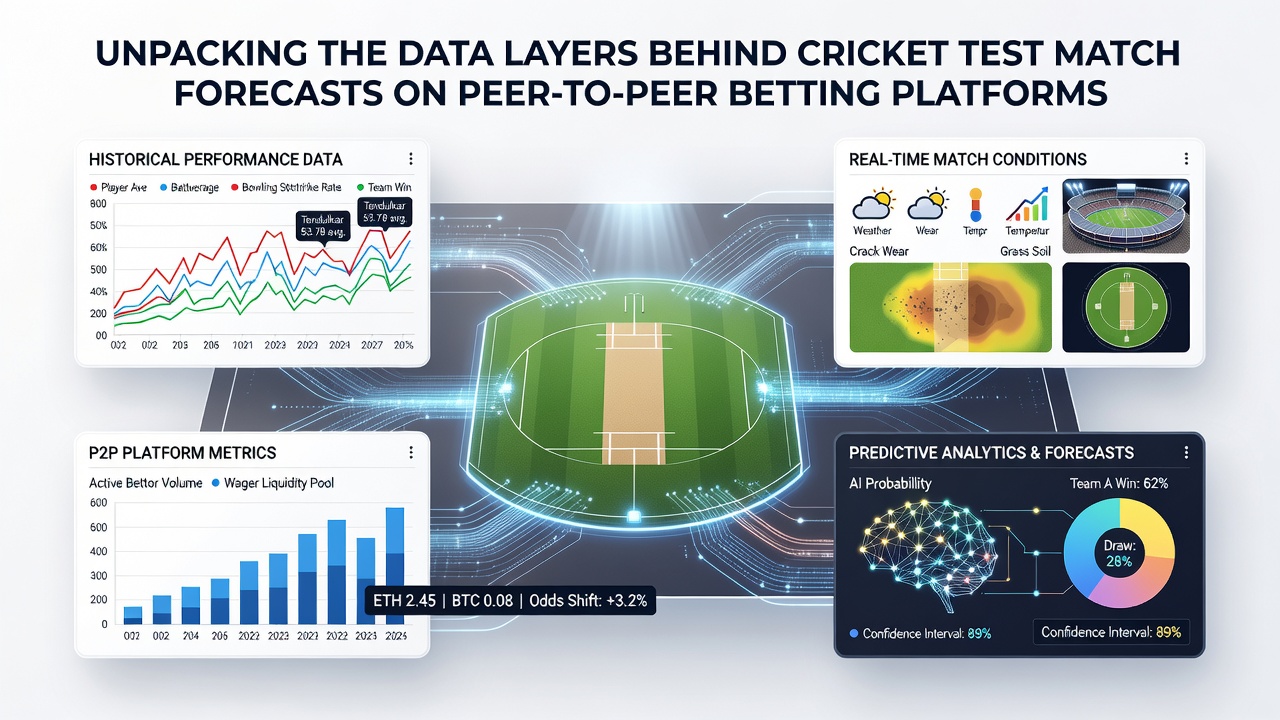
Researchers have identified several foundational data categories that drive forecasts for Test matches, which span up to five days and feature variables that evolve more slowly than those in limited-overs formats. Batting and bowling averages across different pitch types form one base layer, while head-to-head records between specific teams and venues add another dimension according to statistics compiled by major cricket databases. Weather patterns, including humidity levels and rainfall probabilities at grounds in England, Australia, and India, integrate into models because they affect swing, spin, and overall scoring rates.
Player fitness reports and recent injury data enter the analysis through official team announcements, and these details update frequently during long series. In August 2026 the schedule includes multiple Test tours where such updates will influence market activity on peer-to-peer exchanges as participants adjust positions based on last-minute squad changes.
Integration of Real-Time and Environmental Inputs
Live ball-by-ball feeds from scoring systems supply granular data that platforms process to refine forecasts mid-match. Pitch reports issued by groundsmen and independent assessors contribute details on grass cover and expected deterioration, which analysts correlate with historical performance metrics from similar conditions. Environmental sensors at venues now record additional variables such as wind speed and temperature gradients that affect ball behavior over extended periods.
Market Dynamics on Peer-to-Peer Exchanges
Peer-to-peer betting platforms aggregate user forecasts into visible odds that shift according to the volume of matched bets rather than centralized house calculations. Data layers therefore serve both to inform individual participants and to maintain equilibrium across the exchange. Volume-weighted averages of recent wagers on outcomes such as team totals or session runs appear alongside statistical models, allowing observers to compare crowd sentiment with algorithmic projections.
Studies from academic institutions in Australia have examined how these layered datasets influence liquidity during Test series, particularly when matches extend into the final days and uncertainty around results remains high. Regulatory bodies in jurisdictions such as Malta and the Isle of Man require operators to disclose the primary data feeds that support platform transparency, which helps maintain consistent standards across different regions.
Advanced Modeling Techniques
Statistical models used on these platforms often combine regression analysis of past Test results with machine learning approaches that weigh recent form more heavily than older records. Data on umpiring tendencies, including decisions per match and review success rates, enters some forecasts because it affects the effective value of certain betting propositions. Simulations that run thousands of possible match scenarios generate probability distributions for outcomes, and these outputs appear in summarized form on platform dashboards.
One study conducted at a Canadian university compared forecast accuracy across different data layer combinations and found that inclusion of venue-specific pitch evolution data improved projections for matches lasting beyond three days. Such findings contribute to ongoing refinements in the tools available to participants on peer-to-peer sites.
Conclusion
The data architecture supporting cricket Test match forecasts on peer-to-peer betting platforms continues to expand as sensor technology and analytical methods advance. Historical performance metrics, environmental readings, live scoring feeds, and regulatory disclosures together create the layered information environment that participants navigate when placing and matching wagers. As series unfold in periods such as August 2026, these interconnected data streams will remain central to the functioning of the exchanges.